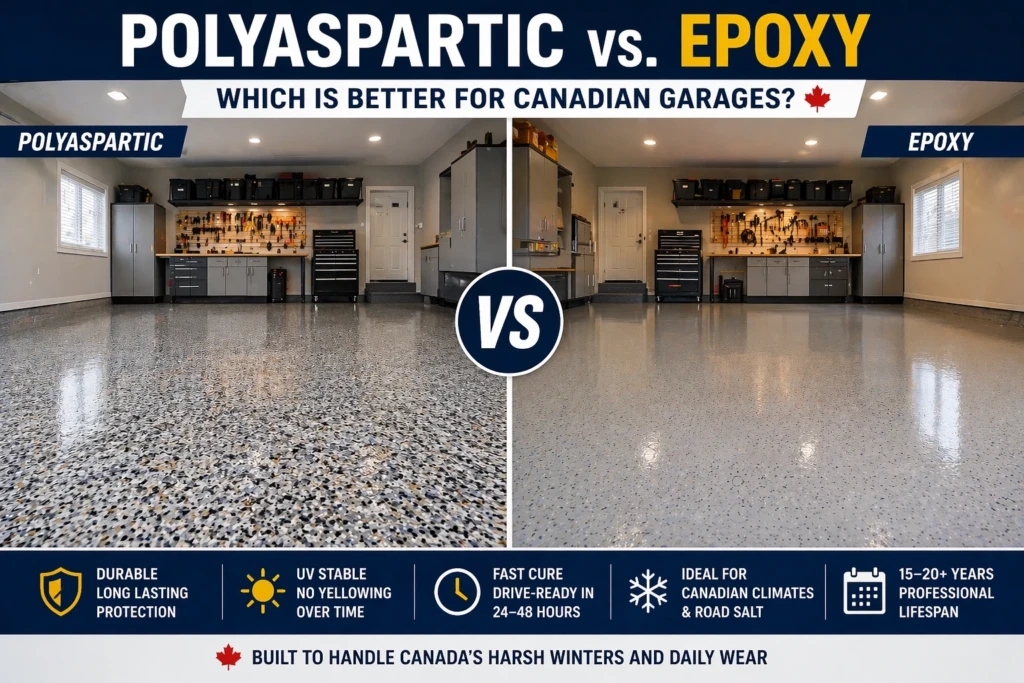
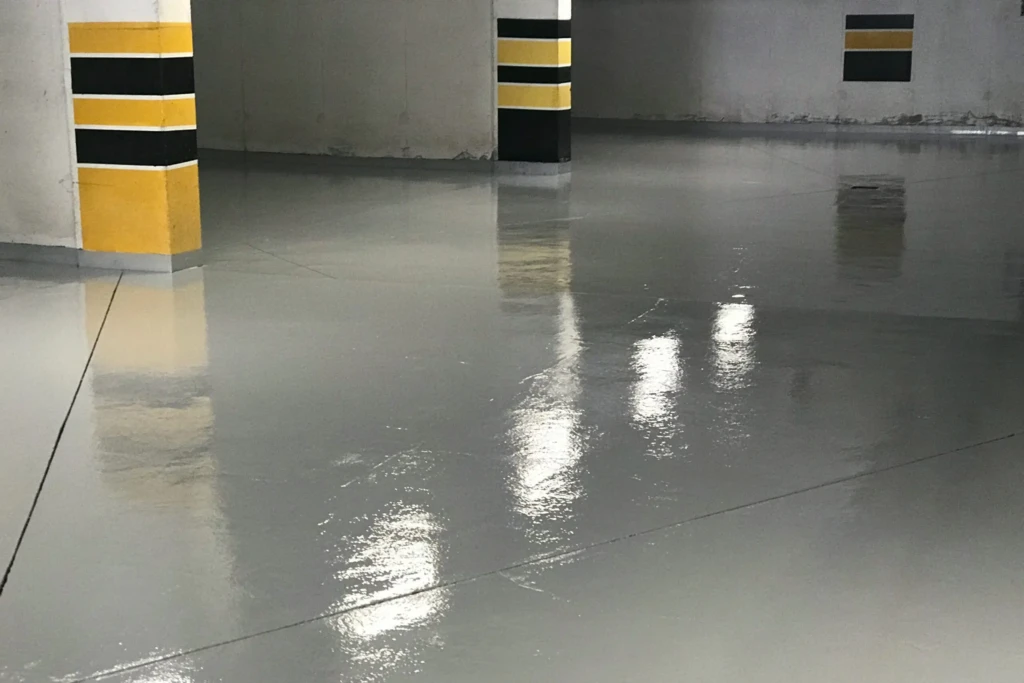
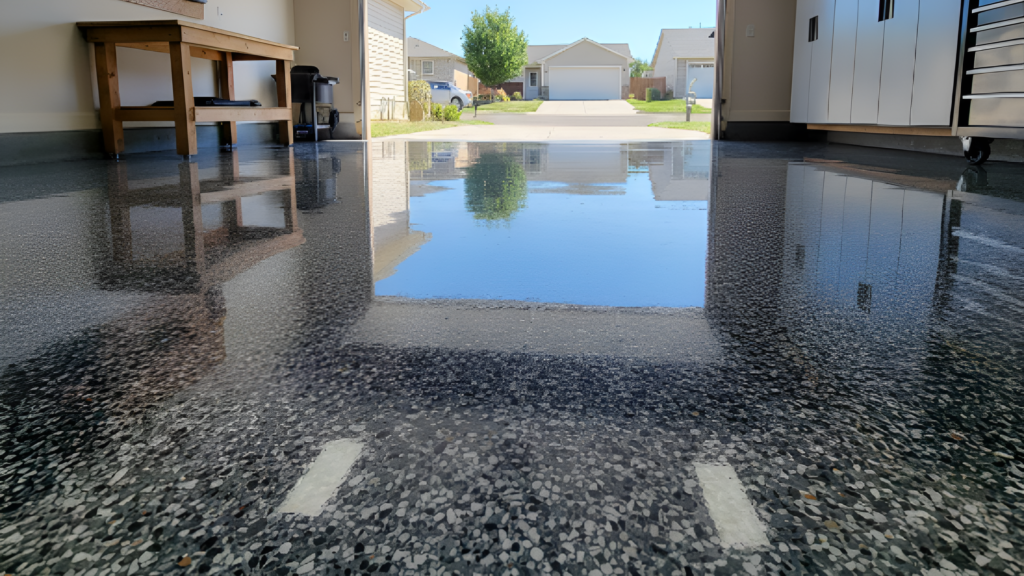
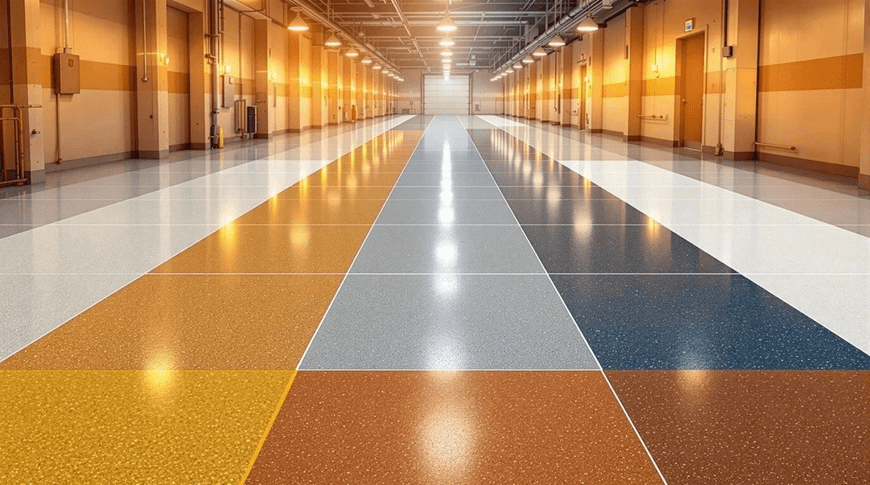
Did you know that epoxy resin comes in vastly different viscosities – from 1000 CPS for deep pours to 7500 CPS for coating applications?
Choosing the wrong type for your project isn’t just frustrating – it can lead to complete failure. Whether you’re tackling an epoxy resin floor in your garage or wondering what is epoxy resin exactly, understanding the differences is crucial. Epoxy resin flooring has become increasingly popular for its durability and esthetic appeal, but selecting the right formula makes all the difference in the final result.
For instance, fast-setting epoxy hardens quickly, making it perfect for smaller, time-sensitive projects, while deep pour epoxy works best for larger applications like river tables and thick castings. Regular epoxy resin, with its 1:1 mixing ratio, serves as an excellent coating or medium for mixing colorants.
As a trusted epoxy flooring specialist in the Greater Toronto Area, we at Monarch Epoxy Coatings understand that high-quality resin should dry to a crystal-clear finish and offer the specific properties your project demands. Throughout this guide, we’ll help you navigate the different types of epoxy resin and ensure you select the perfect match for your next project.
Understanding the Main Types of Epoxy Resin
Epoxy resin isn’t a one-size-fits-all product – each formulation serves a specific purpose for your flooring or craft projects.
Casting resin features a medium viscosity (around 1400 CPS) and works exceptionally well for projects up to 1 inch thick. When poured in thin layers, it creates a clear finish ideal for shallow applications like coasters or jewelry.
Deep pour resin offers lower viscosity (approximately 1000 CPS), making it perfect for thick applications between 2-4 inches. This specialty formulation prevents overheating during curing, essential for river tables and substantial castings.
Coating resin provides high viscosity (approximately 7500 CPS) with minimal flow characteristics. With a hardness rating of 85D after curing, it delivers superior scratch resistance for high-traffic floors and concrete surfaces.
Fast cure epoxy bridges convenience and quality with a medium viscosity of 1700 CPS. It reaches full hardness in just 4-10 hours compared to standard epoxies, making it ideal for time-sensitive garage floor projects.
Polyurethane resin offers a distinct alternative with extraordinarily rapid curing – transforming from liquid to solid in about 10 minutes. Unlike crystal-clear epoxy, polyurethane typically cures to an opaque white finish with exceptional durability.
At Monarch Epoxy Coatings, we carefully select the appropriate resin formulation based on your specific concrete floor requirements, ensuring durability and esthetic excellence throughout Toronto.
How to Match Resin Type to Your Project
Selecting the right epoxy resin fundamentally depends on your specific project requirements. For tabletops, counters, and bar surfaces, choose a crystal-clear formula designed specifically for coating applications, as these self-level and release bubbles efficiently. These coating resins should only be applied in thin layers (no more than 1/4″ at a time).
If you’re creating river tables or projects requiring substantial depth, opt for deep pour resin that allows pours up to 2 inches thick in a single application. Furthermore, these specialty resins generate less heat during curing, preventing bubbles and cracks in thicker applications.
For jewelry projects, consider whether you’re working with molds or bezels. Molds require casting resin with thinner consistency for bubble release, whereas bezels need doming resin that creates a raised, curved surface. Additionally, jewelry-grade resins contain UV protectants to prevent yellowing over time.
Outdoor applications demand resins with UV stabilizers and flexibility to withstand temperature fluctuations. High-traffic floors require exceptionally durable formulations with superior scratch resistance.
Before purchasing, always verify the maximum pour depth, cure time, and whether the resin contains UV protection based on your project’s exposure to sunlight.
For professional epoxy flooring solutions in the Greater Toronto Area, contact Monarch Epoxy Coatings.
Key Factors to Consider Before Buying

Beyond selecting the right type of epoxy, several technical specifications determine success or failure in your epoxy resin floor project.
Viscosity ranks among the most crucial factors when selecting epoxy resin. Low viscosity resins (200-1,000 cP) excel at penetrating surfaces and self-leveling. Conversely, high viscosity formulations (10,000-100,000 cP) provide non-sag properties ideal for vertical applications or when minimal flow is desired.
Working time varies significantly between products – ranging from 5 minutes for fast-curing varieties to 8 hours for slow-setting formulations. Consider your project’s complexity; large epoxy resin floors require longer working periods to ensure proper application.
Curing conditions significantly impact performance. Most epoxies cure optimally at 70-75°F (21-24°C), with humidity ideally around 50%. Inadequate conditions can result in sticky surfaces or incomplete curing.
Hardness measured on the Shore D scale indicates durability – premium epoxies achieve ratings of 80-90 after full cure. This hardness provides excellent scratch and impact resistance necessary for garage and commercial epoxy resin flooring.
UV resistance prevents yellowing, particularly important for decorative floors. Without UV stabilizers, epoxy will gradually yellow when exposed to sunlight.
Mixing accuracy remains essential – deviating from the manufacturer’s recommended ratio results in soft spots or brittleness.
Trust Monarch Epoxy Coatings for premium materials and expert installation of durable, stylish epoxy floors for your home, garage, or business. Contact us at 1-888-868-5090 or visit https://monarchepoxycoatings.ca/
Conclusion
Choosing the right epoxy resin ultimately determines the success or failure of your project. Each type serves a specific purpose – casting resin for thin applications, deep pour for thick castings, coating resin for floors, fast cure for time-sensitive projects, and polyurethane for exceptional durability. Therefore, understanding these differences saves you time, money, and frustration.
Technical specifications likewise play a crucial role in your selection process. Viscosity affects flow characteristics, working time determines application feasibility, and curing conditions impact the final result. Additionally, hardness ratings predict durability, while UV resistance prevents yellowing over time. Most importantly, following exact mixing ratios ensures optimal performance.
Whether you plan to transform your garage floor or create a stunning river table, the right epoxy makes all the difference. At Monarch Epoxy Coatings, we pride ourselves on matching premium materials with expert installation techniques for every project. Our team understands the nuances of different epoxy formulations and can guide you through the selection process.
Ready to transform your concrete floors with the perfect epoxy solution? Contact Monarch Epoxy Coatings today for a free consultation. Our experienced team will assess your project, recommend the ideal epoxy system for your needs, and provide a detailed quote.
Call us at 1-888-868-5090 or visit our website to schedule your consultation. Let us help you create a stunning, durable floor that exceeds your expectations!
FAQs
Q1. What is epoxy resin?
Epoxy resin is a two-part synthetic polymer made by mixing resin and a hardener. When combined, it creates a strong, durable, and chemical-resistant material that cures into a solid plastic-like surface. It is widely used for coatings, adhesives, crafts, flooring, and industrial applications.
Q2. How long does epoxy resin take to dry?
Epoxy resin typically takes 24 to 72 hours to fully cure, depending on the brand, temperature, humidity, and thickness of the pour. Most epoxy resins become touch-dry within 6–12 hours, but complete hardness and maximum strength may take several days.
Q3. What is the difference between epoxy and resin?
“Resin” is a general term for a sticky substance that hardens into a solid material. Epoxy resin is a specific type of resin that requires mixing with a hardener to cure. Compared to other resins like polyester resin, epoxy resin is stronger, more durable, and less prone to shrinking or cracking.
Q4. What is epoxy resin used for?
Epoxy resin is used for a variety of applications like- :Coating and sealing surfaces, Epoxy flooring and garage floors, River tables and furniture making, industrial bonding. Its strength, waterproof properties, and glossy finish make it highly versatile.
Q5. What are the optimal conditions for curing epoxy resin?
For optimal curing of epoxy resin, maintain a temperature between 70-75°F (21-24°C) and a humidity level around 50%. Most epoxies cure best under these conditions. Deviating from these optimal conditions can result in issues such as sticky surfaces or incomplete curing, which can affect the final quality and durability of your epoxy project.