The decision of basement flooring in Toronto should not be compared to the decision of the flooring of the rest of your house. Basements are not on grade and are thus always susceptible to moisture, temperature variations and potential water infiltration. Such circumstances can easily destroy the inappropriate flooring.
Most homeowners are comparing various basement flooring materials, including epoxy, vinyl plank, tile, and carpet. Although each may be applied under specific conditions, their effectiveness varies with moisture, use, and long-term persistence.
This guide provides a practical overview of epoxy basement floor pros and cons, comparing them with other common materials. The idea is straightforward: we want to assist you in selecting the proper flooring based on the actual conditions of your basement in Toronto, not just on appearance or initial price.
What is Epoxy Basement Flooring and How It Performs in Toronto Homes
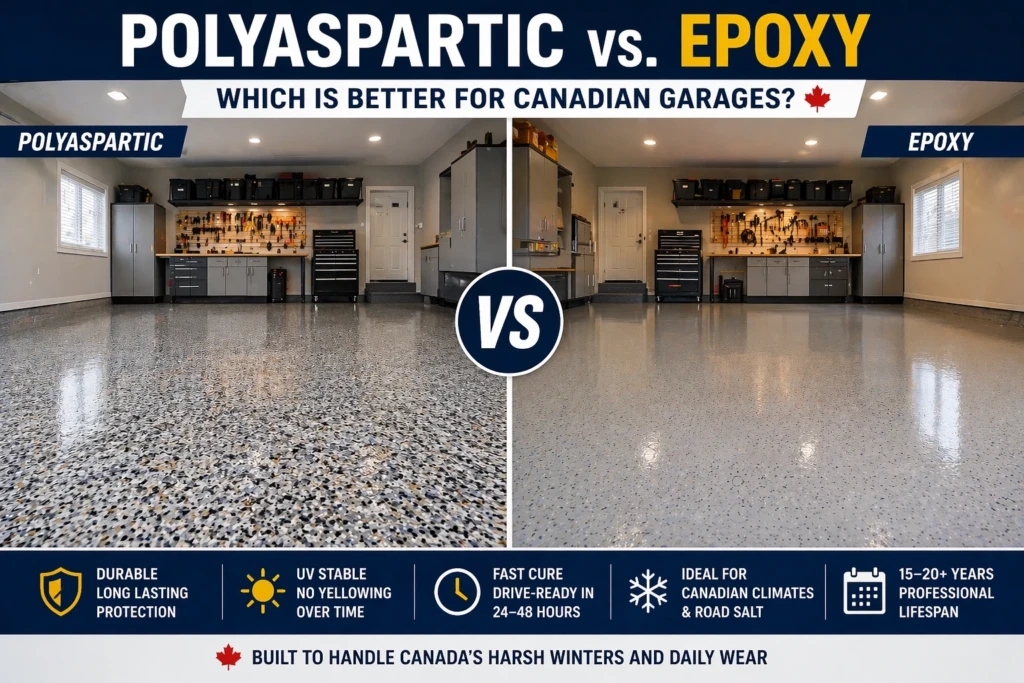
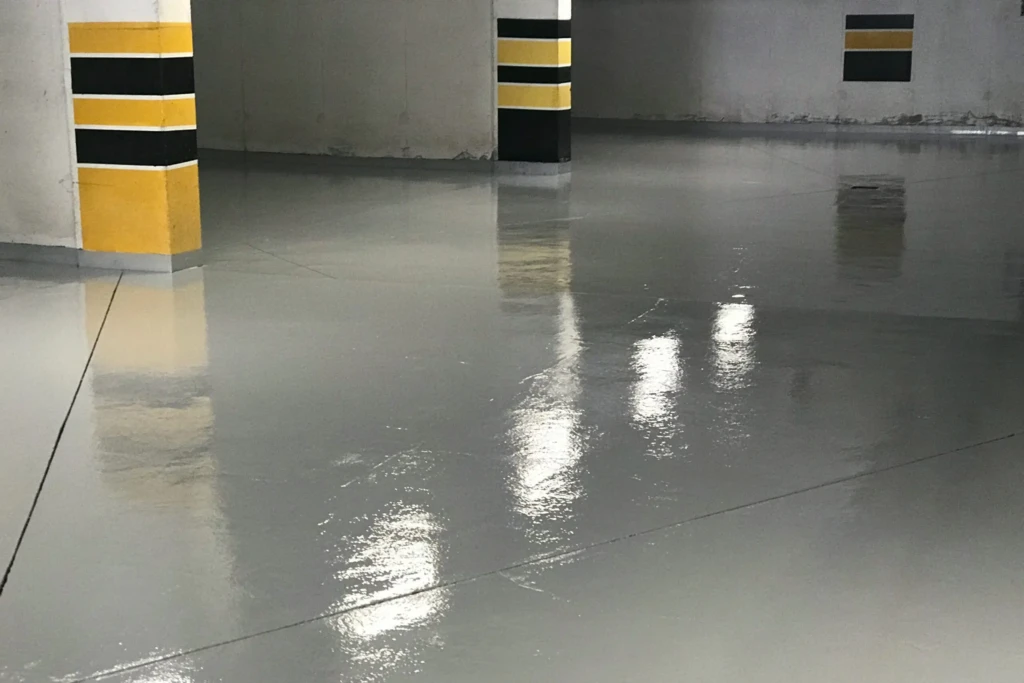
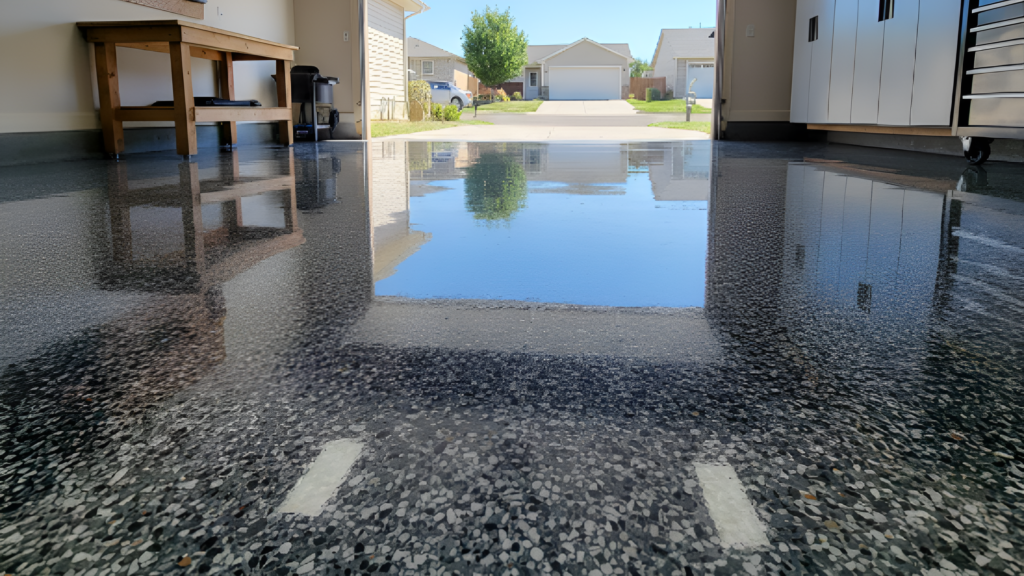
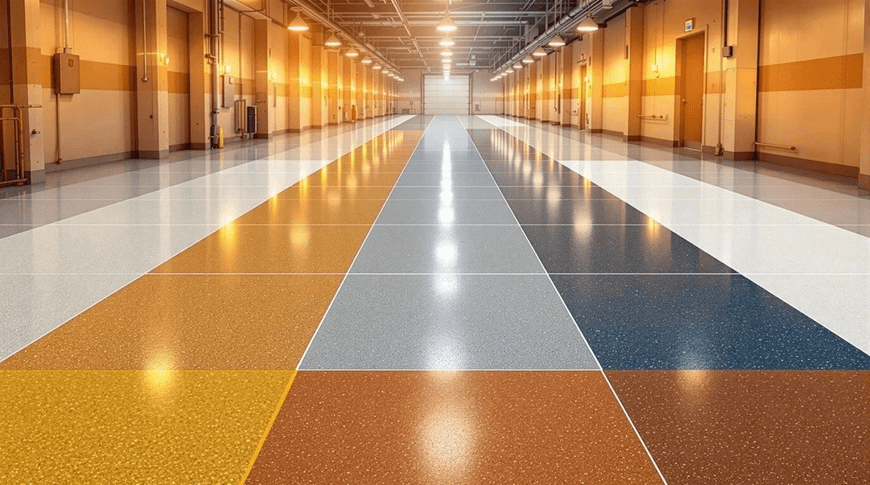
Epoxy basement flooring is a coating applied to a concrete slab. It is made up of resin and hardener, which chemically bond to form a smooth, strong surface. It does not lie on the floor like conventional flooring materials but becomes part of the floor.
This is important in Toronto houses, since most basements are prone to moisture vapor transmission. Even if the concrete contains no water, it will release moisture naturally over time. The materials used in flooring that lies over the slab, such as vinyl or carpet, may trap this moisture and cause mould, odors or even damage to the structure.
Epoxy Basement Floor is one solution to this problem, as it covers the surface and prevents moisture infiltration. It can serve as an effective damp-proofing barrier when properly installed with proper preparation and moisture testing.
Another advantage is that it can perform well in cold climates. Toronto has a freeze-thaw cycle, which may lead to slight changes in concrete. Since epoxy is bonded directly to the slab, it will not loosen or bend easily, unlike floating flooring systems.
But epoxy is not a quick fix. Preparation is crucial to its performance. Any cracks, moisture, or surface contamination should be addressed before installation. Even good-quality epoxy systems may fail without adequate preparation.
For the homeowner considering epoxy flooring from Basement Flooring Toronto, epoxy may not always be the best option; it may be more comfortable than a long-lasting, durable, waterproofing solution.
Epoxy Basement Floor vs Vinyl Plank Flooring
Vinyl plank flooring is among the most preferred basement flooring options because it is affordable and resembles the look found in homes. But upon close comparison of epoxy vs. vinyl plank basement flooring, it is easy to see the disparities in performance and long-term reliability.
Cost comparison in Toronto
Plank flooring made of vinyl is usually cheaper at the outset. Material costs are minimized, and in some cases, installation does not require professional assistance, further reducing labor costs. This will make it appealing to homeowners operating on a strict budget.
Epoxy flooring is more expensive upfront because it requires preparation. The skills needed to grind the concrete, eliminate cracks, and apply several layers of coating. Nevertheless, epoxy has a much longer lifespan than vinyl plank, which may require replacement in 10-15 years, depending on the circumstances.
Thus, although vinyl may be cheaper in the short term, epoxy may be more economical in the long run because it is durable.
Moisture resistance
Where moisture variation is greatest, epoxy creates a smooth, unsealed surface. This makes it the surest waterproof basement flooring option Toronto when properly installed.
Vinyl plank flooring is not water-resistant underneath. When water leaks between edges, joints or small holes, it may be trapped between the vinyl and concrete. This may cause mould growth, unpleasant odors, and damage that is hard to notice until it becomes severe.
This is a significant risk in damp basements where moisture is likely to occur.
Durability
Epoxy is very wear- and tear-resistant. It can easily withstand heavy equipment, storage loads and foot traffic without being dented or scratched. This renders it appropriate to multi-use basements.
Vinyl plank flooring is well-suited to light residential environments, but it is more prone to scratching, denting, and warping over time. It can also be unstable due to temperature changes
Epoxy is obviously more advantageous in the long run.
Installation and downtime
Vinyl plank flooring is easily installed. The majority of the projects take one to two days to complete, which is convenient for homeowners who do not want much disruption.
Installing epoxy is more time-consuming. Surface preparation, application and curing may require several days. At this period, the basement is inaccessible.
Therefore, although epoxy has superior performance, it is also more patient during installation.
Epoxy Basement Floor vs Ceramic / Porcelain Tile
Tile is often seen as a durable and water-resistant option, especially in areas like bathrooms. However, basements create conditions that affect tile performance in different ways.
Installation cost and labor
Tile is one of the most expensive basement flooring options in Toronto. The cost includes materials, underlayment, adhesives, and skilled labor for proper installation.
Epoxy also requires professional installation, but the process involves fewer materials. While costs can overlap depending on the project, tile installations tend to be more labor-intensive overall.
Water resistance and grout issues
Ceramic and porcelain tiles are water-resistant, but the weak point is the grout. Grout lines can absorb moisture, stain over time, and even develop mold in damp environments.
Epoxy eliminates this issue. It creates a seamless surface with no joints, making it a strong solution for waterproof basement flooring Toronto.
This seamless nature also makes cleaning easier, as there are no lines where dirt or moisture can accumulate.
Crack risk in cold climates
Toronto’s freeze-thaw cycles can cause slight expansion and contraction in concrete slabs. Tile is rigid and does not flex, which means it can crack if the substrate shifts.
Epoxy, while not as flexible as rubber, is flexible enough to handle minor movement without cracking. This makes it more reliable in basements exposed to seasonal temperature changes.
Tile can still work well in stable, well-prepared basements, but it carries a higher risk in fluctuating conditions.
Epoxy Basement Floor vs Carpet Flooring
Carpet can be selected to provide comfort, particularly in completed basements where people live. But there are trade-offs with comfort when it comes to moisture.
- Moisture and mold risk
Carpet is very absorbent. Even a minimal amount of moisture in the fibers and padding can provide an optimal environment for mould growth.
This kind of flooring is a great liability in the basement, which is more humid. When mould grows, it can be hard and expensive to remove.
Epoxy does the reverse. It keeps moisture out, does not absorb it and is the best basement flooring for moisture.
- Allergens and air quality
Over time, carpet accumulates dust, pet dander and allergens. Such a buildup can affect the indoor air in a basement, where ventilation may already be low.
Epoxy offers an unporous, smooth surface that is easy to clean and does not retain airborne dust. This feature makes it a preferred choice for keeping the air in closed areas cleaner.
- Comfort vs durability tradeoff
Carpet is very cozy and soft, making it attractive in bedrooms or family rooms.
Epoxy, however, is hard and may be chilly to walk on. Although it is excellent for durability, it might not offer the same level of comfort.
The most viable solution is to apply epoxy as the core and apply carpets in the living rooms. This enables the homeowners to strike a balance between comfort and durability.
Best Basement Flooring for Toronto’s Climate
Toronto’s climate plays a major role in determining the best basement flooring. Knowing these environmental factors can help make a more informed decision.
Freeze-thaw conditions
Temperature varies seasonally, causing concrete to swell and shrink. Flooring materials that cannot withstand this movement may crack or shift. In this aspect, epoxy and vinyl tend to be superior to rigid tile.
Moisture vapor issues in basements
Moisture vapor can ascend through the slab even in the absence of any visible leaks. The hidden damage can result from flooring systems that trap moisture. The use of epoxy as a bond helps better control this problem.
Long-term durability considerations
Basement flooring does not need to be replaced regularly. Materials such as carpet and vinyl may need more frequent replacement, whereas epoxy can have a longer lifespan and require minimal maintenance.
The most important criteria for most homeowners researching Basement Flooring Toronto are moisture resistance and durability, given such conditions.
When Epoxy Basement Flooring is NOT Recommended
Even though epoxy is a powerful alternative, there are instances when it might not be the most appropriate.
Structural cracks
When the concrete slab is structurally flawed, it may not adhere well without extensive epoxy repairs.
High moisture without prep.
When water actively enters the basement, the source should be addressed first. Epoxy does not work in case of continuous leakage.
Comfort-focused living spaces
In basement areas primarily used as bedrooms or living rooms, epoxy can be too hard compared with softer flooring materials.
In such instances, other materials may be more appropriate for the space’s purpose.
Basement Flooring Cost Comparison in Toronto
If you are willing to know about the basement flooring cost Toronto, here is an overview of typical costs.
| Flooring Type | Average Cost (Per Sq Ft Installed) | Key Notes |
| Epoxy | $5 – $12 | Long lifespan, low maintenance |
| Vinyl Plank | $3 – $8 | Affordable, moderate durability |
| Tile (Ceramic/Porcelain) | $8 – $15 | Durable but expensive labor |
| Carpet | $4 – $9 | Comfortable but moisture-sensitive |
All costs will vary based on the preparation required to install the flooring, the condition of your basement, and the quality of the materials chosen.
Final Recommendation for Toronto Homeowners
The best basement flooring for moisture is the one that best suits your requirements. In case the most important features are moisture resistance, durability, and low maintenance, an Epoxy Basement Floor can be one of the most effective solutions. It is particularly effective in damp basements or in damp rooms.
Vinyl plank flooring offers a balance of price and comfort, but must be installed carefully to prevent moisture problems. Tile is long-lasting and has a more upscale look, but it is more expensive and may crack during colder temperatures. Carpet is ideal in dry and finished basements where comfort is the primary consideration.
For most Toronto homeowners facing moisture issues, epoxy can be a long-term, practical solution, but only when it is installed properly and the underlying concrete is well-prepared.