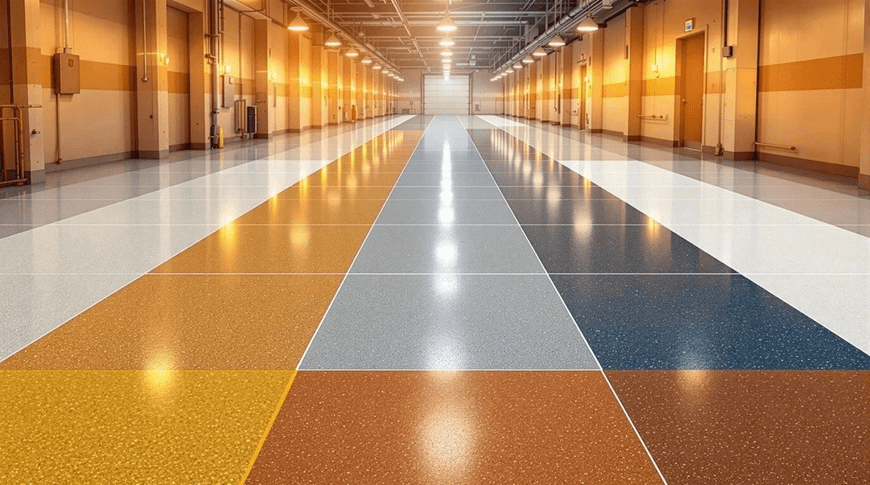
Choosing the right floor coating for your industrial spaces directly impacts productivity, safety, and your bottom line. Industrial floor coatings protect against abrasion, chemicals, and impact damage while extending the life of your concrete substrate. Indeed, optimal coatings minimize downtime, ensure regulatory compliance, and deliver high returns on investment. From epoxy floor coating and polyaspartic floor coating to polyurea and self-leveling options, understanding your choices is essential. This guide explores seven industrial concrete floor coatings, comparing their applications, benefits, and performance characteristics to help you make an informed decision for your facility.
Epoxy Floor Coating

What is Epoxy Floor Coating
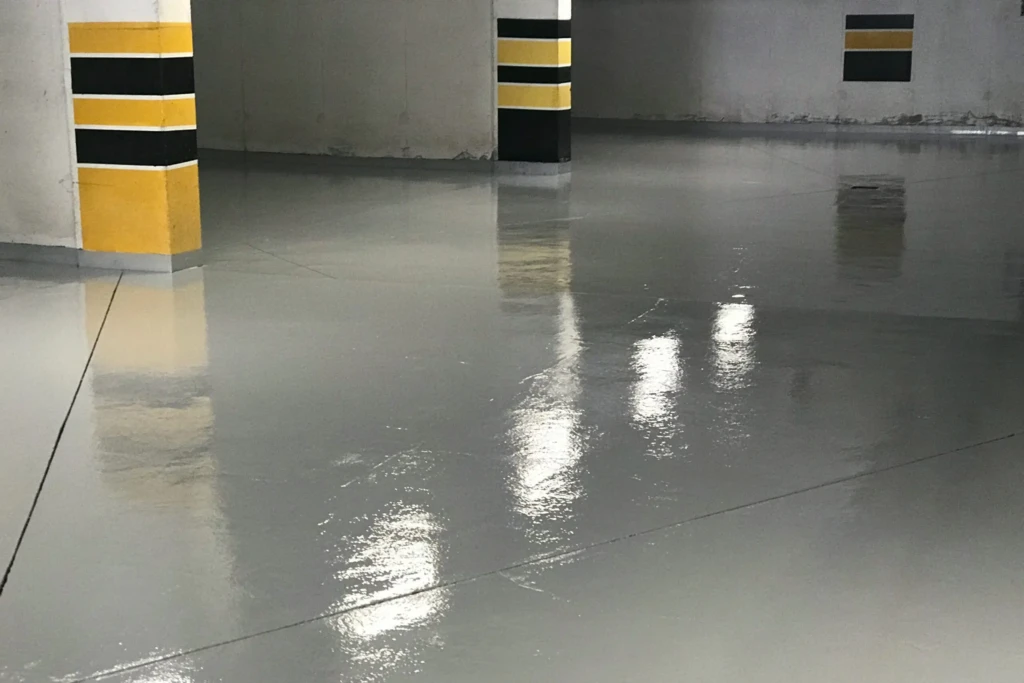
Epoxy floor coating is a two-part system made by mixing epoxy resin (Part A) with a hardener (Part B). This chemical reaction creates a strong, plastic-like material that bonds directly to concrete, forming a durable and protective surface.
Modern epoxy coatings use high-solids formulations that resist heavy traffic, mechanical wear, and chemicals such as oils and solvents. They are usually applied in thick layers, often 2–5 mm in warehouses, depending on traffic and load requirements.
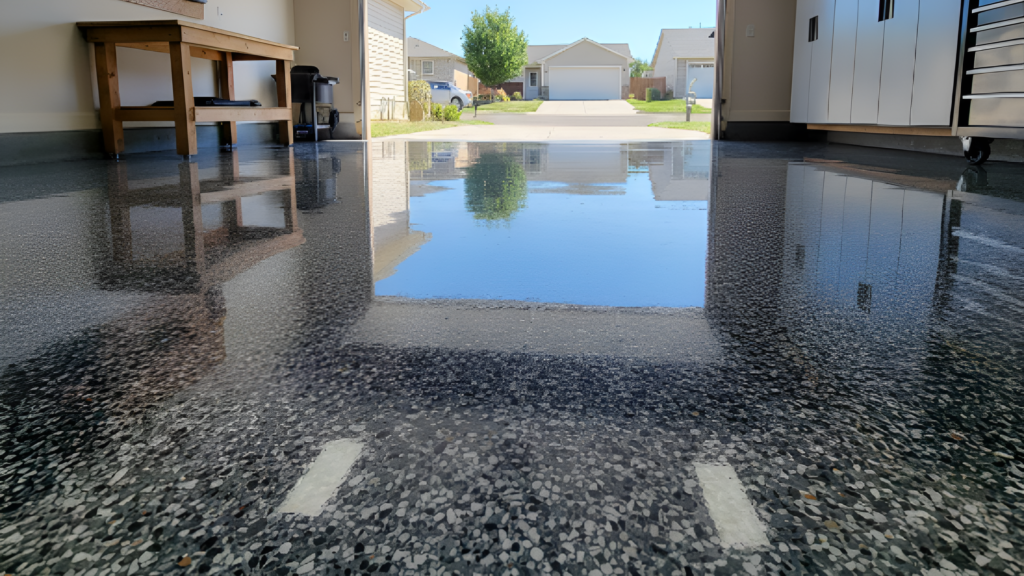
Additives like UV inhibitors, flow agents, and adhesion promoters improve performance. Decorative options such as colored quartz, vinyl flakes, or pigments can also be added for better appearance and slip resistance.
Different systems serve different needs, including self-leveling epoxy for smooth floors, epoxy mortar for extreme durability, anti-static epoxy for static control, and quartz-filled epoxy for traction and chemical resistance. The seamless, non-porous surface also helps prevent dust and bacteria buildup while making floors easy to clean and maintain.
Best Applications for Industrial Spaces
Epoxy floor coatings are widely used in warehouses where forklifts, heavy machinery, and constant material movement require strong and durable flooring. The coating resists impacts, pallet drops, and daily wear while allowing anti-slip finishes and safety line markings for walkways and forklift lanes.
In manufacturing plants and factories, epoxy floors handle heavy loads, dropped tools, and continuous operations while maintaining structural strength. Machine shops and loading docks often use epoxy mortar systems to repair and strengthen damaged concrete surfaces.
Food processing facilities and commercial kitchens benefit from epoxy’s seamless and non-porous surface that resists bacteria, mold, and chemical spills. Quartz-filled epoxy systems provide hygienic, easy-to-clean floors that meet strict sanitation standards.
Polyurethane Floor Coating

What is Polyurethane Floor Coating
Polyurethane floor coating is a polymer-based protective layer applied to surfaces like concrete, wood, and metal. It forms through a chemical reaction between polyols and polyisocyanates, creating a durable coating that protects floors from moisture, chemicals, and bacteria.
These coatings can be customized for different levels of hardness, flexibility, and gloss. Common types include water-based polyurethane for fast drying, solvent-based polyurethane for higher durability, and moisture-cured systems that cure even in humid conditions.
A key advantage of polyurethane is its flexibility and elasticity, allowing it to handle structural movement and temperature changes without cracking. Aliphatic polyurethane also offers strong UV resistance, preventing discoloration and making it suitable for outdoor or high-sunlight areas while maintaining durability under heavy traffic.
Best Applications for Industrial Spaces
Polyurethane floor coatings are commonly used in car parks, outdoor decks, and loading ramps because they provide waterproofing, flexibility, and UV resistance. In food processing facilities and commercial kitchens, the seamless surface resists chemicals, stains, and bacteria, helping maintain hygienic conditions.
They also perform well in cold storage areas and freezers since polyurethane remains flexible at low temperatures. Hospitals, laboratories, and healthcare facilities use it for sterile, seamless, and noise-reducing flooring.
Additionally, transport hubs, warehouses, and manufacturing plants rely on polyurethane for slip resistance, durability, and abrasion resistance. It is also used in chemical plants, pharmaceutical facilities, gyms, schools, and commercial buildings due to its chemical resistance and long-lasting performance.
Polyaspartic Floor Coating

What is Polyaspartic Floor Coating
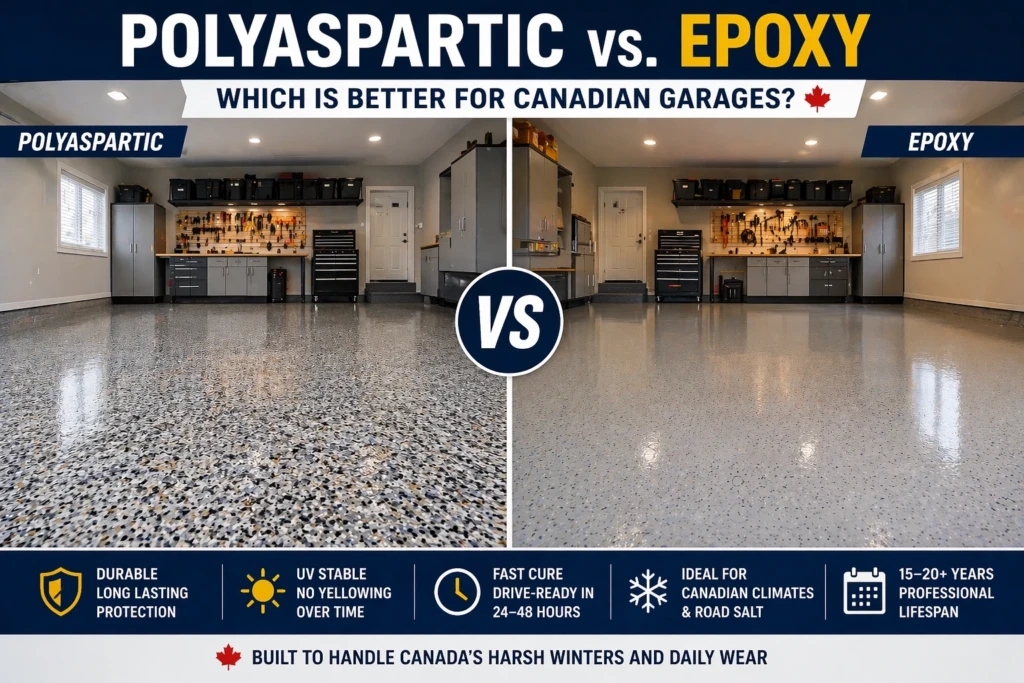
Polyaspartic floor coating is a modified polyurea coating that creates a durable, seamless, and UV-stable protective layer over concrete. Originally developed in the 1990s for steel corrosion protection, it later evolved into a high-performance flooring solution using aliphatic polyurea technology.
The coating cures through a chemical reaction between resin and catalyst, forming a tough and flexible surface. One of its main advantages is fast curing, allowing floors to be ready for foot traffic in 2–3 hours and vehicle traffic within 24 hours, reducing downtime compared to epoxy systems.
Polyaspartic coatings also provide excellent UV resistance, preventing yellowing even in sunlight. They resist impacts, abrasions, and heavy traffic, while their slight flexibility helps bridge small concrete cracks and handle temperature changes without damage.
Best Applications for Industrial Spaces
Polyaspartic coatings are ideal for warehouses and storage areas because they handle forklifts, heavy equipment, and constant operations while resisting grease, oil, chemicals, and hot tire pickup. Their fast curing allows overnight installation with minimal downtime.
In manufacturing plants, factories, and airline hangars, polyaspartic floors withstand heavy machinery, abrasions, chemical spills, jet fuel, and de-icing fluids. Food processing plants, pharmaceutical facilities, and commercial kitchens use them for seamless, hygienic, and easy-to-clean surfaces that help prevent contamination.
Hospitals, laboratories, and clinics benefit from low-odor installation and antimicrobial surfaces suitable for cleanrooms and patient areas. Retail showrooms and commercial spaces also use polyaspartic coatings for their UV stability, decorative finishes, and long-lasting durability.
Polyurea Floor Coating

What is Polyurea Floor Coating
Polyurea floor coating forms through a reaction between diamine and diisocyanate, creating a fast-curing, highly durable protective layer that bonds strongly to concrete and metal. The result is a tough yet flexible coating that resists cracking, peeling, and damage in harsh environments.
One major advantage of polyurea is its extremely fast curing time. It becomes dry to the touch within seconds, walkable in minutes, and fully cured within about 24 hours, allowing facilities to resume operations quickly.
Polyurea is significantly stronger and more durable than traditional coatings, resisting scratches, dents, heavy equipment, and forklift traffic. It can last 15 years or more with minimal maintenance.
Another key feature is its high flexibility, allowing the coating to expand and contract with temperature changes. It can bridge small concrete cracks and perform well in extreme temperatures, making it suitable for both cold storage and high-heat industrial environments.
Best Applications for Industrial Spaces
Polyurea coatings are ideal for warehouse floors because they handle heavy machinery, pallet jacks, and constant traffic without cracking. Their high impact resistance protects floors from dents, scratches, and abrasions, while fast curing reduces downtime in busy distribution centers.
In manufacturing plants and factories, polyurea resists chemical spills, heavy equipment, and continuous foot traffic, making it suitable for production lines and loading docks. Chemical plants, automotive repair shops, and fleet garages benefit from its strong resistance to oils, gasoline, and harsh chemicals, which also makes cleaning easier.
Food processing facilities use polyurea for its seamless, hygienic surface that prevents bacteria buildup and withstands frequent chemical cleaning. It is also widely used in cold storage areas and containment zones because it remains flexible in freezing temperatures and resists cracking, corrosion, and leaks.
Acrylic Floor Coating

What is Acrylic Floor Coating
Acrylic floor coating is a water-based protective coating made from acrylic resins, pigments, fillers, and additives. It is a single-component system, so it does not require mixing before application. As it dries, water evaporates and leaves a smooth film that bonds to surfaces like concrete, wood, masonry, and asphalt.
Its biggest advantage is fast drying, becoming dry to the touch in about 30 minutes and allowing quick project completion. Acrylic coatings are also low in VOCs, making them environmentally friendly and suitable for indoor use. Fillers such as silica or quartz sand can be added to improve wear resistance and slip resistance.
However, acrylic coatings are less durable than epoxy or polyurethane. They provide limited resistance to heavy traffic, oils, gasoline, and strong chemicals. Because of this, they are best for light to moderate traffic areas and may require recoating every 1–2 years to maintain performance.
Best Applications for Industrial Spaces
Acrylic floor coating serves industrial plants, automobile factories, and machinery processing facilities that need wear-resistant surfaces without extreme chemical exposure. Storage facilities and logistics warehouses benefit from smooth, wear-resistant flooring. Commercial places including shopping centers, supermarkets, and retail environments utilize acrylic for esthetically pleasing, easy-to-clean surfaces.
Medical and health facilities such as hospitals and laboratories apply acrylic where antibacterial and easy-to-clean characteristics matter. Transportation facilities including parking lots, airports, and stations handle moderate vehicle and pedestrian traffic. Residential garage floors, commercial service areas, sport courts, patios, and multi-unit utility areas represent ideal applications.
Elastomeric Floor Coating

What is Elastomeric Floor Coating
Elastomeric floor coating is a liquid-applied membrane that forms a flexible, rubber-like protective layer over concrete, metal, wood, and asphalt surfaces. Built from elastomers (polymeric materials that reversibly deform under stress), these coatings stretch at least twice their original length and recover to original dimensions. Applied approximately 10 times thicker than conventional paint, elastomeric systems create a high-build barrier that fills gaps and seals surfaces. Formulations range from 30 to 90 mils in thickness, with typical curing times of 24 hours for normal operation.
The coating’s composition allows it to bridge hairline cracks up to 1/16-inch, maintaining waterproof integrity even as substrate movement occurs. This crack-bridging capability prevents water infiltration through expanding concrete joints. Roller or spray application methods cure to form a seamless, flexible membrane that protects against chemicals, abrasion, and impact while remaining elastic over time.
Best Applications for Industrial Spaces
Parking garages and loading docks represent primary elastomeric applications, where the elastic nature creates waterproofing layers for each floor level while handling pallet truck movement. Mechanical rooms and pump rooms benefit from vibration resistance and crack protection in environments with constant equipment operation.
Warehouses utilize elastomeric coatings for moisture-sensitive areas requiring waterproof barriers. Stadium concourses handle heavy foot traffic while maintaining slip resistance. Food and beverage facilities, pharmaceutical plants, and manufacturing environments apply elastomeric systems where chemical resistance combines with hygiene requirements.
Self-Leveling Epoxy Floor Coating

What is Self-Leveling Epoxy Floor Coating
Self-leveling epoxy spreads evenly across surfaces once poured, automatically filling dips, cracks, and imperfections to create a level surface without manual intervention. This two-part combination of resin and hardener produces a chemical reaction that bonds to concrete, tile, or other materials, resulting in flooring that feels like hard plastic. The self-leveling nature stems from lower viscosity compared to standard epoxy, allowing the mixture to spread evenly under gravity and settle into a perfectly flat layer. Applied at thicknesses ranging from 1 to 3 millimeters, the coating creates smooth, seamless, and highly reflective surfaces.
Best Applications for Industrial Spaces
Warehouses, packaging areas, and cleanrooms benefit from easy-to-clean surfaces. Pharmaceutical facilities and laboratories utilize mirror-smooth surfaces. Monarch Epoxy Coatings transforms concrete floors into durable, stylish surfaces using premium materials and expert installation for industrial spaces across the Greater Toronto Area.
Conclusion
Selecting the right floor coating for your industrial space comes down to understanding your specific operational demands. Epoxy delivers unmatched adhesion and chemical resistance, while polyurethane excels in flexibility and UV stability. Polyaspartic offers rapid installation with minimal downtime, and polyurea provides exceptional strength for the most demanding environments. Acrylic suits light-duty applications, elastomeric handles waterproofing needs, and self-leveling epoxy creates seamless smooth surfaces.
With this in mind, evaluate your facility’s traffic patterns, chemical exposure, temperature extremes, and budget constraints before making your decision. Monarch Epoxy Coating is a trusted epoxy flooring specialist serving the Greater Toronto Area, transforming concrete floors into durable, stylish, and long-lasting surfaces using premium materials and expert installation for homes, garages, and businesses.
If you’re ready to transform your concrete floor from drab to dynamic, contact our team of experts today. We’ll discuss your ideas, assess your space, and provide a no-obligation quote for your project.
Contact us Today!
Phone: +1 888-868-5090
Website: www.monarchepoxycoatings.ca
Visit Us: 18 King St E Toronto, ON, M5C 1C4, Canada
FAQs
Q1. What are the main types of floor coatings used in industrial facilities?
Common industrial floor coatings include epoxy, polyurethane, polyaspartic and polyurea. Each type offers different benefits such as durability, chemical resistance, flexibility, and curing speed.
Q2. Why is epoxy flooring popular in industrial environments?
Epoxy flooring is popular because it creates a strong, seamless, and highly durable surface that can handle heavy machinery, constant traffic, and chemical exposure in manufacturing facilities.
Q3. How does polyaspartic coating compare to epoxy in flexibility?
Polyaspartic coatings are much more flexible than epoxy, allowing them to handle substrate movement and temperature changes without cracking.
Q4. What are the benefits of Self-Leveling Epoxy Flooring?
It provides durability, chemical resistance, easy maintenance, seamless appearance, and long-lasting protection for concrete floors.
Q5. Which floor coatings install the fastest?
Polyaspartic and polyurea coatings have the fastest installation times. Polyaspartic floors are ready for foot traffic in 2–3 hours, while polyurea can become walkable within minutes, reducing downtime.